
What’s the Difference Stair Restoration & Stair Renovation?
Your staircase is one of the hardest-working parts of your home.
It’s used countless times every day, yet it’s often overlooked until something starts to bother you. Perhaps it’s beginning to creak, the timber looks tired, the spindles feel dated or the whole staircase no longer suits the style of your home.
When that happens, one question often comes up.
Do you need a stair restoration or a stair renovation?
Although the two terms are often used interchangeably, they mean different things. Understanding the difference can help you decide which approach is right for your home, your budget and your long-term plans.


What Is Stair Restoration?
A stair restoration focuses on bringing an existing staircase back to its former condition while preserving as much of the original structure as possible.
It’s often the best option when the staircase is structurally sound but has simply become worn through years of use.
Restoration work might include:
- Repairing damaged timber
- Replacing worn treads
- Sanding and refinishing wood
- Repairing handrails
- Replacing individual spindles
- Restoring original features
Rather than changing the staircase completely, restoration celebrates the craftsmanship that’s already there.
This approach is particularly popular in period properties where homeowners want to retain the character and history of the home.
What Is Stair Renovation?
A stair renovation goes a step further.
Instead of simply repairing what’s there, it changes the appearance, functionality or layout of the staircase to better suit modern living.
Depending on the project, this could include:
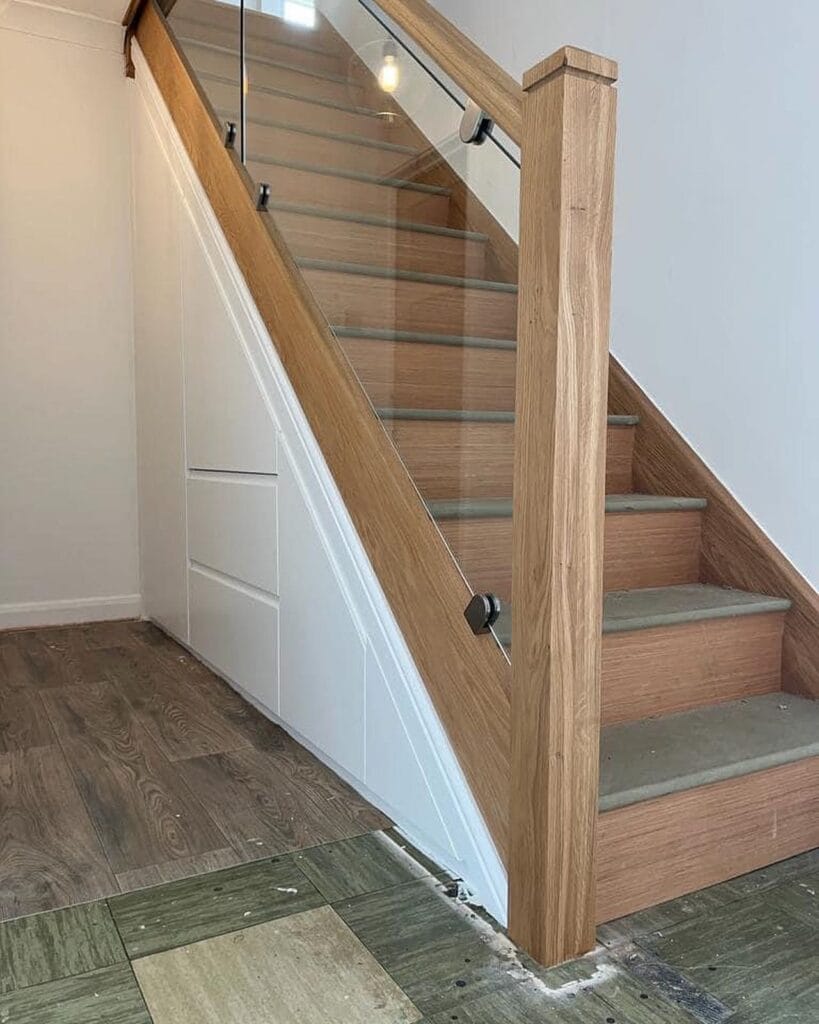
- Replacing handrails and balustrades
- Installing new spindles
- Closing open risers
- Updating the overall design
- Adding bespoke understairs storage
- Modernising finishes
- Improving safety for families
A renovation gives you the opportunity to completely refresh the look of your hallway without necessarily replacing the entire staircase.
Which One Do You Need?
The answer depends on what you’re hoping to achieve.
Stair restoration is usually the right choice if:
- You love the existing character of your staircase.
- The structure is still in good condition.
- You want to preserve original features.
- The staircase simply needs repairing or refreshing.
Stair renovation may be better if:
- The staircase feels outdated.
- You want a more modern appearance.
- Open stairs no longer suit your family.
- You’d like to improve safety.
- You’re renovating other parts of your home and want everything to work together.
Sometimes a project includes elements of both.
For example, you might keep the original staircase structure while updating the handrails, replacing worn components and creating bespoke storage underneath.
Safety Matters More Than Ever
One of the biggest reasons homeowners choose a stair renovation is safety.
As families grow, the way a home is used changes.
Open tread staircases that once looked contemporary may feel less practical with young children or pets. Loose handrails, worn steps or ageing timber can also become concerns over time.
Renovating a staircase gives you the opportunity to improve both safety and practicality without losing the character of your home.


The Staircase Sets the Tone for Your Home
Your staircase is often one of the first things people notice when they walk through the front door.
An older staircase with worn finishes can make an otherwise beautifully decorated home feel tired.
A carefully restored or renovated staircase can completely transform that first impression.
Clean lines, quality timber, thoughtful detailing and a beautifully finished handrail all help create a hallway that feels brighter, more welcoming and more in keeping with the rest of the property.
A Great Opportunity to Improve Storage
If you’re already updating your staircase, it’s worth thinking about the space underneath too.
Many understairs areas are underused, becoming somewhere to hide coats, shoes and boxes without any real organisation.
A bespoke solution can transform this awkward area into practical storage with:
- Pull-out drawers
- Built-in cupboards
- Shoe storage
- Coat cupboards
- Hidden utility space
By combining a staircase renovation with bespoke storage, you can improve both the appearance and functionality of your hallway at the same time.


Quality Craftsmanship Makes All the Difference
Whether you’re restoring an original staircase or renovating it completely, quality craftsmanship is what brings the project together.
It’s about far more than replacing timber or fitting new spindles.
It’s taking the time to ensure every joint is precise, every finish is smooth and every detail feels as though it has always belonged in your home.
Which Option Is Right for You?
There’s no one-size-fits-all answer. Some homes deserve to have their original features carefully restored. Others benefit from a fresh new look that better suits modern family life.
The right solution depends on the condition of your staircase, how you use your home and what you want to achieve.
At Mat Scrase Bespoke Carpentry, we take the time to understand your home before recommending the best approach. Whether it’s a careful stair restoration, a complete stair renovation or combining the project with bespoke understairs storage, everything is built with care and designed to last.
Based in Market Harborough, we work with homeowners across Leicestershire to create staircases that are safer, more practical and beautifully finished.
If you’re considering updating your staircase, we’d be happy to talk through your ideas and help you decide which option is right for your home.
📍 Based in Market Harborough, serving Leicestershire and nearby
🛠 Bespoke carpentry and joinery
✨ Family-run and built with care
